In a World Cup matchup like Spain vs Uruguay, small margins matter: one transition, one set piece, one lapse in concentration. But over 90 minutes, the teams that consistently control how the match is played usually create more high-quality chances and concede fewer dangerous moments.
That’s the core reason Spain are widely viewed as more likely to win a World Cup meeting with Uruguay on 26 June: Spain’s typical strengths—ball control, technical security in midfield, structured pressing, and squad depth—tend to translate into repeatable advantages in tournament football. When Spain execute their plan, they can force opponents to defend for long stretches, reduce volatility, and create the kind of steady pressure that eventually turns into goals.
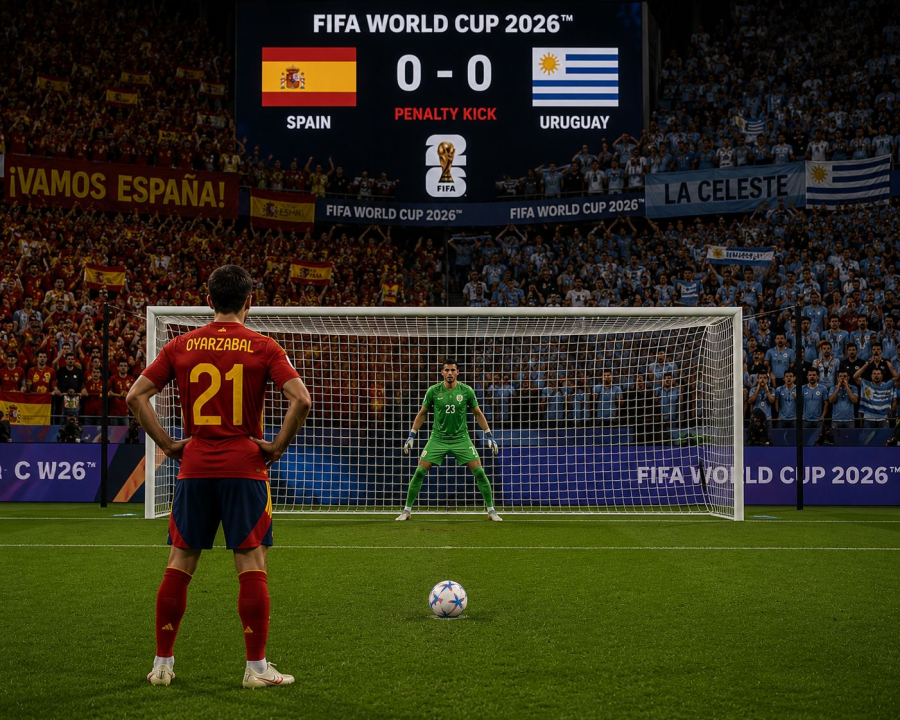
This article breaks down the main on-field reasons Spain can be favored, the patterns that often decide this specific style clash, and the practical checklist that makes a Spanish win more probable.
World Cup pedigree matters: Spain’s proven blueprint for tournament wins
Both nations have serious footballing heritage, but Spain’s modern identity is built around a particularly tournament-friendly approach: controlling possession, limiting turnovers in dangerous areas, and wearing teams down with patient circulation.
- Spain have won the FIFA World Cup (2010) and the UEFA European Championship (2008, 2012), demonstrating that their possession-and-control model can deliver the biggest titles.
- Uruguay are also two-time World Cup winners (1930, 1950) and historically one of international football’s most competitive teams, often thriving in knockout-style, high-emotion games.
The key distinction is not “history vs history,” but repeatability: Spain’s most successful teams have tended to win through sustainable control of territory and tempo—an approach that can travel well from match to match, regardless of opponent.
The stylistic matchup: why Spain’s strengths can neutralize Uruguay’s best routes to goal
Uruguay are traditionally at their most dangerous when games become direct, transitional, and emotionally intense: win the ball, attack quickly, win set pieces, and punish defensive lapses. Spain, by contrast, generally aim to reduce transitional chaos by keeping the ball and counter-pressing immediately after losses.
In simple terms, Spain’s best path to victory is to keep the match played at Spain’s preferred speed.
1) Possession control can starve Uruguay of transition opportunities
Teams like Uruguay often rely on moments: regains, quick outlets, diagonal runs, and decisive finishing. Spain’s possession-oriented approach can reduce how often those moments occur.
- Fewer defensive transitions for Spain means fewer high-value counterattacks for Uruguay.
- More time defending in a low block for Uruguay increases fatigue and concentration demands.
- More sustained Spanish pressure tends to produce set-piece volume, second balls, and late-game openings.
Over a full match, even a small edge in ball security can translate into a large edge in territory and shot quality.
2) Midfield overloads: Spain’s technical security can win the game’s “engine room”
World Cup matches are frequently decided in midfield: who receives under pressure, who turns, who connects the next pass, and who forces the opponent to foul or retreat.
Spain’s player development has long prioritized comfort in tight spaces—first touch, scanning, and short passing combinations. Against Uruguay, that matters because it can:
- Pull Uruguay’s midfield out of shape, opening half-spaces for runners.
- Create third-man combinations that bypass compact lines without needing risky passes.
- Force Uruguay to defend longer phases, increasing the chance of a single marking error.
When Spain win the midfield rhythm, they can dictate where the match is played: closer to Uruguay’s penalty area and farther from Spain’s.
3) A structured press can turn Uruguay’s clearances into repeat attacks
Uruguay are often comfortable defending deep and clearing under pressure. The question becomes: what happens next? If Spain counter-press effectively and keep the opponent pinned, clearances come right back—turning the game into waves of pressure.
Spain’s pressing advantage is less about all-out aggression and more about positioning: having enough players close to the ball to win second balls, stop outlets, and immediately restart attacks.
That kind of pressure doesn’t always look dramatic, but it is highly effective at producing:
- Turnovers in advanced areas
- Shots after regains (often high quality)
- Fouls around the box (useful for set-piece chances)
Depth and flexibility: a major edge in a World Cup match
World Cup football is compressed. Match plans change quickly due to cards, fatigue, and game state. A team’s ability to solve problems with substitutions and tactical tweaks can be decisive.
Spain’s talent pool has often allowed them to adjust within the same identity:
- Control mode: add an extra midfielder to protect the ball and slow the game.
- Chance-creation mode: introduce more direct wingers or attacking fullback profiles to increase crossing and cutbacks.
- Defensive lock mode: add fresh legs to press and protect transitions late in the match.
Uruguay can absolutely be tactically sharp, but Spain’s typical advantage is having more like-for-like options to sustain their style for 90 minutes and beyond.
How Spain can create goals against Uruguay: three repeatable patterns
Uruguay are often well organized defensively, so Spain’s success tends to come from patterns that force defenders to make uncomfortable decisions. Here are three ways Spain can generate the kind of chances that win big tournament games.
1) Switches of play to isolate wide attackers
Compact defenses shift toward the ball. Spain can exploit that by circulating possession to one side, drawing Uruguay across, then switching quickly to attack the far side in space.
- The benefit is simple: more 1v1 situations and better crossing angles.
- It also forces Uruguay’s wide midfielders to cover huge distances, accelerating fatigue.
2) Cutbacks after reaching the byline
Against deep blocks, cutbacks are often more efficient than high crosses because they target runners arriving at the top of the box rather than aerial duels with set defenders.
Spain’s possession can help them enter the box under control, where a cutback creates a high-quality shooting opportunity.
3) Late runs from midfield
One of the hardest things to defend is a midfielder arriving late—after defenders have already locked onto the striker and wide threats. Spain’s passing networks often support this pattern: draw defenders to the ball, then find the late runner into the gap.
These chances can be especially valuable against teams that defend with discipline for long spells, because one late run can defeat 80 minutes of good structure.
A practical advantage: Spain can make Uruguay defend for longer than Uruguay want to
Even when Uruguay are defending well, prolonged defending has costs:
- Concentration tax: one missed assignment can decide the match.
- Foul risk: tired defenders are more likely to foul near the box.
- Counterattack distance: as legs tire, outlets become harder and counters lose speed.
Spain’s ability to keep the ball can turn the match into a repeated decision-making test for Uruguay. That is a favorable environment for Spain because it increases the probability that Spain will eventually find a clean opening.
Key duels that can tilt the outcome toward Spain
While a World Cup match is a collective effort, several duel types commonly decide this kind of fixture. Spain tend to come out on top when they win these battles.
Spain’s pivot and center backs vs Uruguay’s first press
If Spain play out calmly, Uruguay are forced deeper and have fewer opportunities to win the ball high. That immediately increases Spain’s control of territory and tempo.
Spain’s fullbacks and wingers vs Uruguay’s wide midfield coverage
Spain can overload wide areas to create 2v1s. If Uruguay’s wide midfielders cannot consistently track runners, Spain will generate entries into the box through overlaps and underlaps.
Spain’s counter-press vs Uruguay’s outlet passes
Uruguay become most dangerous when they can escape pressure cleanly. Spain’s ability to win the ball back quickly can be the difference between a comfortable Spanish win and a game decided by a single counter.
At-a-glance: why Spain can be the smarter bet
| Spain advantage | What it typically produces | Why it matters vs Uruguay |
|---|---|---|
| Possession control | Territory, fewer opponent attacks | Limits Uruguay’s transition chances |
| Midfield technical quality | Progression through tight spaces | Breaks compact blocks without risky long balls |
| Structured pressing | Regains, repeat waves of pressure | Turns Uruguay clearances into more Spanish attacks |
| Squad depth | Effective substitutions, tactical flexibility | Helps Spain sustain intensity and control late |
| Game-state management | Slowing tempo, reducing volatility | Prevents the “one moment” Uruguay thrive on |
What Spain must do to convert advantage into a win
Spain’s edge is real, but it only becomes a result if they execute the details that matter most against a disciplined, street-smart opponent like Uruguay.
1) Protect against counters with smart rest defense
When Spain attack, their positioning behind the ball is crucial. Keeping enough players in place to stop the first pass of a counterattack reduces Uruguay’s most dangerous weapon.
- Maintain compact spacing behind the attack.
- Be ready to foul tactically in safe areas if needed (without reckless cards).
- Do not overcommit both fullbacks at the same time unless the counter-press is set.
2) Be patient, but not passive
Possession is only valuable if it creates pressure. Spain should aim for a balance: recycle the ball to control the match, but accelerate quickly when the opening appears.
That means:
- Quick switches when Uruguay shift heavily to one side.
- Decisive runs beyond the ball to stretch the defensive line.
- Sharp combinations around the box to create cutbacks and close-range chances.
3) Treat set pieces as an opportunity, not an afterthought
In tight World Cup games, set pieces can decide outcomes. Spain can improve their win probability by maximizing:
- Corner routines designed for clean first contact
- Second-ball positioning at the edge of the box
- Defensive organization to prevent counters after attacking set pieces
Even if Spain are known for open-play control, a set-piece goal can be the perfect reward for sustained pressure.
Momentum and psychology: Spain’s style can force Uruguay into lower-percentage choices
One underappreciated benefit of Spain’s control-based approach is psychological. When an opponent spends long periods without the ball, frustration can creep in. Presses become less coordinated, challenges become late, and the defensive line can lose synchronization.
That doesn’t mean Uruguay will “collapse” (they are typically resilient), but it does mean Spain can increase the odds of:
- A poorly timed step out of the back line
- A needless foul near the penalty area
- A clearance that drops to a Spanish midfielder for a second-phase shot
Over time, Spain’s approach can turn the match into a sequence of decisions where Spain are comfortable and Uruguay are constantly reacting.
Prediction logic: why “Spain to win” is a rational call
Forecasting a single football match is never guaranteed, especially at the World Cup where moments can flip everything. But if you’re looking for the most logical, repeatable reasons Spain can be favored to beat Uruguay on 26 June, they come down to this:
- Spain can control the ball, which reduces Uruguay’s best attacking scenarios.
- Spain can control the midfield, which determines where the match is played.
- Spain can sustain pressure through structure and depth, increasing the likelihood of a decisive breakthrough.
- Spain can manage game state if they score first, limiting the chaos that underdogs often need.
If Spain execute those fundamentals—secure circulation, smart counter-pressing, and purposeful chance creation—the probability of a Spanish win rises considerably. And in tournament football, being the team with the clearest, most controllable pathway to victory is often the biggest advantage of all.
Final takeaway
Uruguay are capable of punishing any opponent, especially if a game becomes open, transitional, and emotional. But Spain’s core strengths are designed to prevent exactly that kind of match. With superior control of tempo, strong midfield mechanics, and the ability to apply repeat pressure, Spain have a compelling, fact-based case to be the more likely winner in a World Cup meeting on 26 June.
For fans, that’s the exciting part: if Spain impose their rhythm early, the match can tilt steadily in their favor—one controlled sequence at a time—until the breakthrough arrives.
