A Spain vs Saudi Arabia clash at the 2026 FIFA World Cup would be a compelling contrast in styles: Spain’s possession-first, positional structure against a Saudi Arabia side that has grown more confident, more organized, and more capable of punishing mistakes in transition.
Because tournament draws and match schedules can change everything, this guide is written as a factual, evergreen preview of what this matchup would likely hinge on, how to follow team news in the build-up, and what we can say with confidence about previous meetings between the two nations.
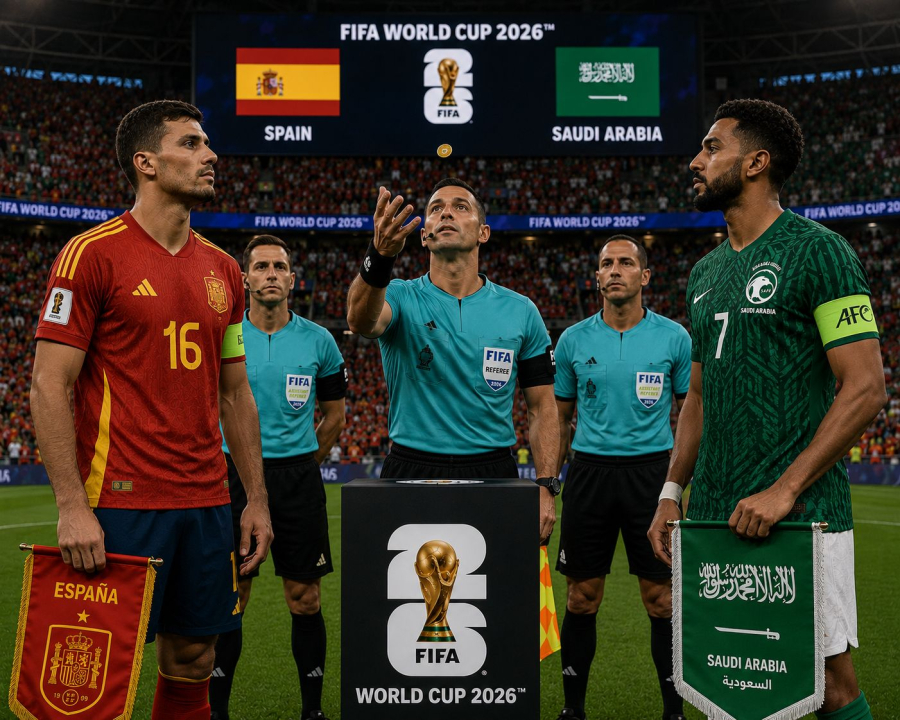
Why this matchup is exciting in a 2026 World Cup setting
The 2026 World Cup (hosted across the United States, Canada, and Mexico) expands the field to 48 teams, increasing the variety of intercontinental matchups that fans can realistically see. A Spain vs Saudi Arabia meeting fits that theme perfectly: different football cultures, different player development pathways, and a tactical chess match that rewards discipline.
From a fan’s perspective, the upside is clear:
- Spain brings technical quality, control, and a deep pipeline of elite midfield talent.
- Saudi Arabia brings cohesion, intensity, and an underdog energy that can lift performance levels in high-stakes games.
Team news: how to track the most important updates (without guessing)
“Team news” can mean a lot more than just who starts. For a World Cup match, the most valuable updates typically fall into a few buckets. If Spain and Saudi Arabia meet in 2026, these are the angles most likely to swing the game.
1) Availability: injuries, knocks, and fatigue
World Cups often come after long club seasons. The most meaningful late changes are usually:
- Muscle injuries (hamstrings, calves) that limit pressing or sprint repeatability.
- Accumulated fatigue that reduces sharpness in decision-making and first touch.
- Minor knocks that don’t rule players out but affect duels, aerials, and acceleration.
2) Selection: the “profile” choices that shape the game
Even if everyone is fit, coaches can tilt the matchup with selection choices such as:
- Spain choosing between an extra controller in midfield vs an extra runner or direct winger.
- Saudi Arabia choosing between a deeper, compact defensive block vs a slightly higher line to contest midfield.
- Full-back profiles: conservative defenders vs aggressive overlap providers.
3) Suspensions and tournament management
In tournament football, yellow-card management matters. A team carrying players one card away from suspension can subtly alter how aggressively they press, tackle, or stop counters.
Projected tactical themes: what each team can do well
Without locking into a single predicted lineup, we can still identify the tactical levers that often define games involving a possession-dominant favorite against a well-drilled opponent.
How Spain can generate advantages
- Control through midfield rotations: Spain’s best stretches often come when midfielders and interior forwards interchange to create passing triangles and free players between the lines.
- Territory and sustained pressure: long spells in the opponent’s half can lead to set pieces, second-ball chances, and high-value cutbacks.
- Counter-pressing: winning the ball back quickly after losing it helps prevent transitions, a key risk in this kind of matchup.
How Saudi Arabia can create high-impact moments
- Compact defending: staying connected between lines can force Spain wide, turning the match into a crossing and patience test.
- Transitions: quick, direct attacks after recoveries can punish overcommitted full-backs and high midfield positioning.
- Set-piece threat: in World Cups, dead-ball moments often decide games, and underdogs can maximize these with clear routines and aggressive attacking of the first contact.
Key players to watch (style fit, not speculation)
Actual squads depend on final selection and fitness, but these are examples of player profiles that typically influence a Spain vs Saudi Arabia tactical battle.
Spain: profiles that can decide the match
- Midfield controller: the player who sets tempo, breaks lines with passing, and manages risk when Spain is camped in the opponent’s half.
- 1v1 winger: a wide attacker who can consistently beat a defender, forcing the block to shift and opening space for cutbacks.
- Press-resistant interior: someone who can receive under pressure and turn, turning sterile possession into chance creation.
Saudi Arabia: profiles that can swing momentum
- Transition carrier: a forward or wide player who can carry the ball 20 to 40 meters to relieve pressure and create a shot or foul.
- Defensive organizer: a central defender or holding midfielder who keeps distances tight and directs the block.
- Big-moment finisher: the attacker who needs only one or two looks to make the game feel uncomfortable for a favorite.
Spain vs Saudi Arabia: previous meetings and historical context
When preparing for a World Cup preview, head-to-head history is useful if it’s meaningful and recent. In this case, the most important factual point is straightforward:
- Spain and Saudi Arabia have not met in a FIFA World Cup finals match (group stage or knockout) in the modern World Cup era.
That means there is no direct World Cup “rivalry” pattern (no repeated tournament meetings, no recurring tactical tells from prior World Cup head-to-heads) to lean on.
Head-to-head snapshot (World Cup finals)
| Category | Spain vs Saudi Arabia |
|---|---|
| World Cup finals meetings | 0 |
| Most recent World Cup finals meeting | None |
As for non-World Cup senior international meetings (such as friendlies), published match archives can vary in completeness across eras and sources. For the most accurate, match-by-match record, rely on official federation match centers and FIFA-recognized match listings once a 2026 fixture is confirmed.
What a “best-case” game plan looks like for each side
One reason this matchup is so marketable is that both teams can point to clear, positive pathways to success.
Spain’s best-case pathway
- Start fast: early tempo reduces the chance the opponent settles into a comfortable block.
- Score first: it forces Saudi Arabia to open up, increasing space for Spain’s passers and wingers.
- Limit transitions: clean rest-defense structure (who stays back when attacks build) keeps the match in Spain’s preferred rhythm.
Saudi Arabia’s best-case pathway
- Stay compact for long stretches: making the game feel repetitive can frustrate a possession side.
- Win the key moments: one transition, one set piece, one defensive error forced by pressing intensity.
- Turn it into a psychological test: if it’s level late, pressure naturally shifts to the favorite, and belief grows for the underdog.
Match “swing factors” that often decide games like this
If you want a simple checklist to follow during the match (or in pre-match analysis), these factors commonly determine outcomes in favorite vs disciplined-opponent World Cup ties:
- First goal: changes risk tolerance, spacing, and substitution strategy.
- Set pieces: corners and wide free kicks can outperform open-play chances in tight games.
- How Spain handles counters: a single miscontrolled pass can become a Saudi break if spacing is wrong.
- Wide duels: can Saudi Arabia stop 1v1s without overcommitting, and can Spain consistently create cutback lanes?
- Goalkeeper involvement: sweeping behind a line, commanding crosses, and distribution under pressure.
What this matchup can mean for fans and each team’s story
For Spain, a World Cup match like this is a chance to show maturity: converting control into goals, staying patient, and managing the moments that often trip up possession-heavy teams.
For Saudi Arabia, it’s an opportunity to reinforce a powerful message: that preparation, cohesion, and belief can narrow gaps quickly on the world stage. In a single-match environment, being organized and fearless creates real upside.
FAQ
Has Spain ever played Saudi Arabia at the World Cup?
No. As of the modern World Cup record, Spain and Saudi Arabia have not met in a World Cup finals match.
What “team news” matters most close to kick-off?
The highest-impact updates are usually: confirmed availability (injuries), any suspensions, and the coach’s selection choices that signal intent (extra midfielder, extra winger, or a more defensive setup).
What’s the most likely tactical pattern if they meet?
A common pattern would be Spain holding more possession and territory, with Saudi Arabia prioritizing compactness and looking for transition chances and set pieces. The first goal can heavily shape how the pattern evolves.
Final takeaway
A Spain vs Saudi Arabia World Cup 2026 matchup would be defined by clarity of plan: Spain aiming to turn control into consistent high-quality chances, and Saudi Arabia aiming to make every defensive sequence count while maximizing the game’s biggest moments. With no prior World Cup head-to-head history between them, it would feel fresh, high-stakes, and wide open to narrative-making performances.
